

V-thread
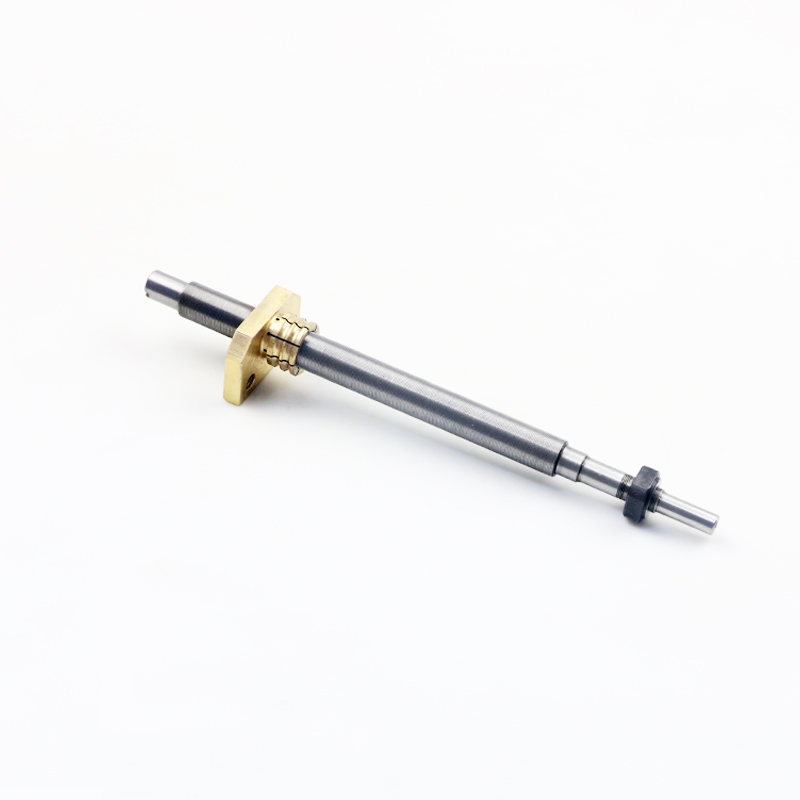
Trapezoidal Lead Screw Metric Thread 304 Stainless Steel Brass M12×0.5 Starts 1 Pitch 0.5
Motion components for high-load, high-precision applications in automation, medical, and inspection equipment—from selection through volume delivery.
Shaft Diameter
—
Lead
—
Accuracy Grade
—
Delivery
—
Product Overview
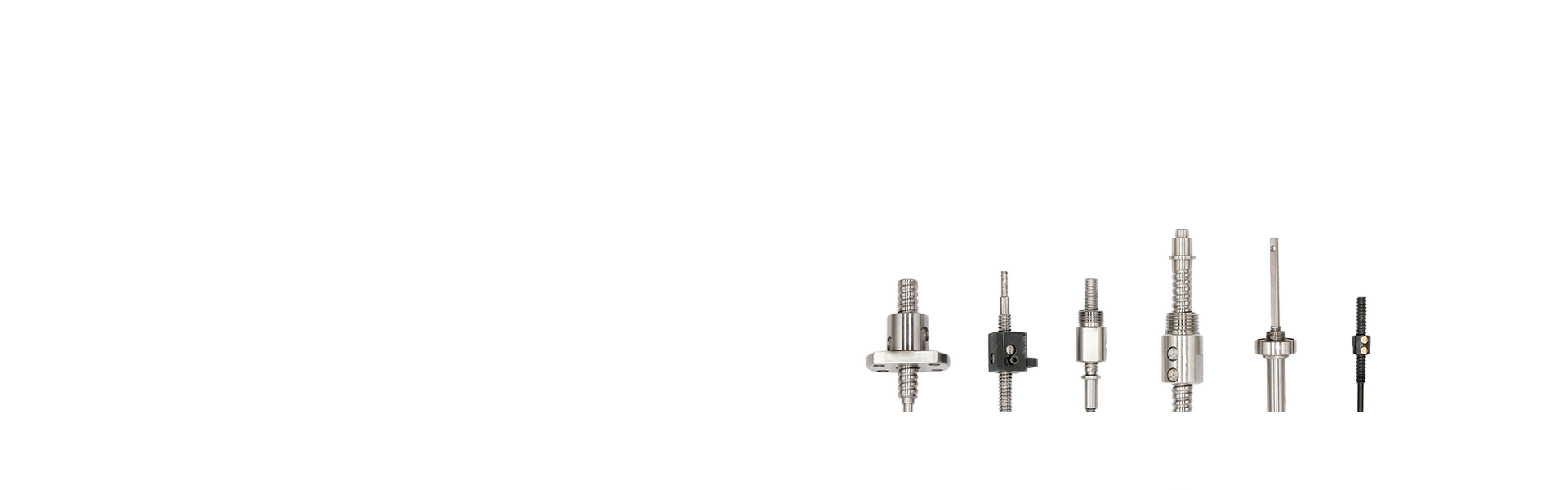
Suzhou Skoller Automation Equipment Co., Ltd. supplies ball screws, trapezoidal screws, and related motion components for precision applications, with standard catalog and custom options for automation, inspection, and medical equipment.
Model
Trapezoidal Lead Screw Metric Thread 304 Stainless Steel Brass M12×0.5 Starts 1 Pitch 0.5
Brand
SKL / WKT
Applications
High-precision linear motion
Services
Selection, machining, delivery, and after-sales support
Technical Specifications
Lead Screw
SCREWTECH Automation
Offers trapezoidal, triangular, Acme, circular-arc, Gothic, and reciprocating thread types in nominal diameters 2–28 mm, with precision up to grade 5. Over ten years of manufacturing experience; suitable for transmission adjustment, vertical lifting, precision feeding, and various automation scenarios.
Core Features
Six Thread Types · One-Stop Solution
Covers six thread types—trapezoidal, triangular, Acme, circular-arc, Gothic, and reciprocating—meeting diverse needs from fastening to precision transmission, reciprocating motion, and high-speed feeding.
Trapezoidal Screw Self-Locking · Safe & Reliable
Trapezoidal lead screw assemblies are self-locking, requiring no extra locking device in vertical lifting systems and offering a higher safety factor if the motor stalls. Widely used in lifts, jacks, and similar equipment.
Three Processes · Selectable Precision
Rolling, turning, and grinding are available, with precision up to grades 5–7. The rolling process yields a dense surface, unlimited length-to-diameter ratio, fast delivery, and excellent consistency.
Multiple Materials & Nuts · Full Customization
Stainless steel (SS303/304/316/440C), carbon steel (S45C/40Cr), bearing steel, and titanium alloy; eight nut series plus an anti-backlash series, with metal, plastic, and composite materials.
Applications
Installation & Usage Notes
Correct installation and use directly affect a lead screw's transmission accuracy and service life. The following are professionallead screw installation notesandlead screw maintenancekey points; please observe them.
1. Installation Notes
Maintain Installation Accuracy — Concentricity & Straightness
Between the lead screw, guide, and bearing blockmisalignment or poor straightnessThis causes shaft distortion, sticking, and accelerated thread wear. During installation, use a dial gauge to keep parallelism error ≤0.05 mm/300 mm. Lead screws tolerate moderate installation precision but still require basic alignment.
Verifying Trapezoidal Screw Self-Locking
A trapezoidal screw's self-locking depends onthe lead angle and friction coefficientWhen the lead angle is below the static friction angle, the screw is self-locking. For vertical lifting, confirm the self-locking condition is met; otherwise install a brake to prevent load drop.
Prevent Nut Seizure — Trial Fit with Light Rotation
Lead screws use sliding friction with a small nut-screw clearance. If resistance rises abnormally during installation, do not force the nut on—check for debris, burrs, or misalignment, as forced assembly causes thread galling.
Proper Preload Setting
Anti-backlash nuts eliminate reverse clearance via preload, but excessive preload raises friction torque and wear. Choose preload by load and accuracy; generally keep it under 10% of rated dynamic load.
2. Lubrication & Maintenance
Lead Screws Rely Heavily on Lubrication
Lead screws use sliding friction, with a friction coefficient far higher than ball screws(Sliding friction coefficient ≈0.1–0.3; ball screw ≈0.003), so lubrication is especially important for lead screws. Proper lubrication cuts the friction coefficient by over 50% and significantly extends service life.
Lubricant Selection
General conditions: lithium grease (NLGI 2) or oil;
Plastic nuts (POM/nylon/PEEK): dry-film or silicone grease to avoid mineral-oil swelling;
Food/medical industry: NSF H1 food-grade grease;
High-temperature environment: molybdenum-disulfide (MoS₂) grease rated above 300 °C.
Lubrication Interval
Lubricate more frequently than ball screws—replenish grease every 100 km of travel or monthly. In dusty, humid, or heavy-load conditions, shorten to every two weeks. Self-lubricating plastic nuts can extend to every three months.
3. Environmental Requirements
Operating Temperature
Metal nuts: −20 °C to +120 °C
POM nuts: −40 °C to +80 °C
PEEK nuts: −60 °C to +250 °C
Dust & Corrosion Protection
Dust accelerates thread wear; use covers in dusty environments. In corrosive settings, choose stainless steel (304/316/440C) with suitable surface treatment.
Avoid Dry Running
Never run a lead screw unlubricated for long periods; it causes rapid wear, sticking, or galling from the extreme heat of metal-to-metal dry friction.
Speed Limit
High speeds generate significant friction heat. Keep sliding speed ≤0.5 m/s (≤0.3 m/s for plastic nuts); consult us for higher speeds.
Common Fault Prevention
Abnormal Wear: Usually caused by insufficient lubrication, contamination, or poor material pairing. Inspect thread wear regularly and replenish lubrication promptly.
Drive Sticking: May result from misalignment, thread deformation, or contamination. Disassemble, inspect the threads, clear debris, then re-lubricate and reinstall.
Increased Backlash: Long-term wear enlarges clearance. Restore accuracy by replacing the anti-backlash nut or adjusting preload.
Increased Noise: Dry friction in metal nuts or aging of plastic nuts. Check lubrication; replace plastic nuts showing obvious wear or deformation.
Why Choose SCREWTECH
Lead Screw FAQ
Common questions on lead screw selection, installation, and maintenance to help you understand the product quickly.
Q1: What is the difference between a lead screw and a ball screw?
Friction: Lead screws use sliding friction; ball screws use rolling friction.
Efficiency: Lead screw efficiency 30–70%; ball screw efficiency 90–98%.
Accuracy: Ball screws offer higher positioning accuracy (grades C3–C7); lead screws suit general-precision drives.
Self-Locking: Trapezoidal lead screws self-lock; ball screws do not.
Cost: Lead screws are low-cost and simple, suited to low-to-medium speed/accuracy and self-locking needs.
Selection tip: choose ball screws for high-precision/high-speed; lead screws for low-cost self-locking.
Q2: Why is a trapezoidal screw self-locking?
A trapezoidal screw's self-locking comes fromthe lead angle being smaller than the static friction angle. When the screw stops rotating, the axial load cannot overcome the static friction between the threads, so the nut will not slide down on its own.
The self-locking condition depends on lead, diameter, and friction coefficient. Smaller lead and larger diameter improve self-locking. For vertical lifting, verify the condition is met; if the safety margin is insufficient, add a braking device.
Q3: Can lead screws use plastic nuts?
Absolutely.Plastic nuts (POM, nylon, PEEK) are common companions for lead screws, with these advantages:
1. Self-lubricating: some plastics are self-lubricating, reducing or eliminating external lubrication;
2. Low noise: plastic-on-metal runs far quieter than metal-on-metal;
3. Corrosion resistance: suited to food, medical, and chemical wet/corrosive environments;
4. Lightweight: significantly lower overall weight.
Note: plastic nuts have lower load capacity and heat resistance than metal nuts; choose metal for heavy-load or high-temperature use.
Q4: What is the function of an anti-backlash nut?
An anti-backlash nut usesa preload structure to eliminate axial clearance(backlash) between screw and nut, achieving zero-clearance transmission.
Common anti-backlash structures include:
1. Dual-nut preload: two nuts pressed together by a spring or shim;
2. Split nut: the nut is cut axially and clamping force is adjusted via screws;
3. Spring nut: elastic deformation of plastic or spring automatically compensates wear clearance.
Anti-backlash nuts significantly improve reverse transmission accuracy, ideal for automation equipment requiring precise positioning.
Q5: How to choose the thread type for a lead screw?
Different thread types suit different scenarios:
Trapezoidal (Tr): high transmission efficiency, easy to machine, and self-locking—the most common drive thread, for general lifting and feed mechanisms.
Metric triangular (M): mainly for fastening, low transmission efficiency, not recommended for power transmission.
Acme: the imperial version of trapezoidal, 29° thread angle, high load capacity, for heavy-duty transmission.
Circular-arc: high root strength and low stress concentration, for impact-load conditions.
Reciprocating: a single screw produces reciprocating linear motion without a reversing mechanism, for reciprocating automation equipment.
Q6: How to choose the surface treatment for a lead screw?
Zinc/nickel plating: basic rust protection for general industrial environments at low cost.
Hard chrome plating: high surface hardness (HRC60+), good wear resistance, low friction—for high-frequency reciprocating motion.
PTFE (Teflon) coating: very low friction (0.05–0.1), excellent anti-stick and corrosion resistance, for food and chemical equipment.
Tungsten-disulfide (WS2) coating: dry-film lubrication, no extra oil needed, for vacuum, cleanroom, or oil-free environments.
Black oxide / phosphating: rust and wear resistance at low cost, for general transmission.