

Dia.8mm
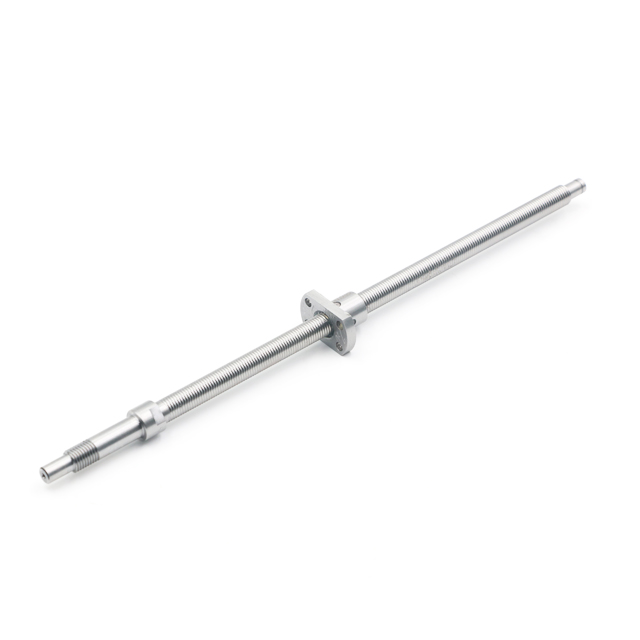
MIH0802 WKT Flange Type Miniature Ball Screw - Ø8mm C5 Precision Left-hand Precision Transmission
Motion components for high-load, high-precision applications in automation, medical, and inspection equipment—from selection through volume delivery.
Shaft Diameter
8
Lead
2
Accuracy Grade
—
Delivery
In Stock
Product Overview
Suzhou Skoller Automation Equipment Co., Ltd. supplies ball screws, trapezoidal screws, and related motion components for precision applications, with standard catalog and custom options for automation, inspection, and medical equipment.
Model
MIH0802 WKT Flange Type Miniature Ball Screw - Ø8mm C5 Precision Left-hand Precision Transmission
Brand
SKL / WKT
Applications
High-precision linear motion
Services
Selection, machining, delivery, and after-sales support
Technical Specifications
| Shaft Diameter (mm) | 8 |
|---|---|
| Lead (mm) | 2 |
| Basic dynamic load rating (N) | 1370 |
| Basic static load rating (N) | 2540 |
| Nut form | Round Nut with Flange |
| DmN Value (mm·r/min) | 21 |
Miniature Ball Screw
A brand of SCREWTECH Automation  (WKT)
(WKT)
Offers miniature ball screws from Φ3 to Φ20 mm, precision grades C1–C5, transmission efficiency ≥90%, for precision transmission in medical, semiconductor, robotics, and similar applications.
Core Features
Stainless Steel · Corrosion-Resistant & Long-Life
Austenitic stainless (304/316/316L) and martensitic 440C (9Cr18) with vacuum-quenched hardness HRC56–58 combine excellent corrosion resistance and high hardness, suited to medical, food, chemical, and cleanroom environments.
Miniature from Φ3 mm · Ultra-Compact Precision
Minimum shaft diameter Φ3 mm with nut outer diameter as small as 6 mm, designed for tight spaces like medical micro-pumps, optical focusing, semiconductor probe stations, and micro-robot joints. Φ4–Φ12 mm are stock sizes covering most miniature precision needs.
Small Diameter, Large Lead · High-Speed Transfer
Small-diameter, large-lead sizes (Φ6/lead 6, Φ8/lead 10, Φ10/lead 10, Φ12/lead 10 mm) deliver high-speed linear feeding in a compact body, greatly improving cycle time. Cap/externally-circulating structures ensure smooth, low-noise high-speed operation.
Typical Applications
Why Choose WKT
Installation & Usage Notes
Correct installation and use directly affect a miniature ball screw's accuracy retention and service life. The following are professionalball screw installation notesandball screw maintenancekey points; please observe them.
1. Installation Notes
Maintain Accuracy — Concentricity & Squareness
Between the ball screw, bearings, guide, and nut seatmisalignment or poor squarenessThis causes shaft distortion, leading to poor running, increased noise, stronger vibration, and shorter life. During installation, use a dial gauge to check concentricity and keep parallelism error ≤0.02 mm/300 mm.
Prevent Nut Drop — Handle with Care
Because ball screws have low friction, the productthe nut or shaft may slide off under its own weight during installation or removal. Support vertically installed screws and hold the nut assembly horizontally to avoid drop impact that could damage balls or the circulator.
Never Disassemble the Nut Yourself
After the ball screw nut separates from the shaft,balls may fall out of the circulation system, damaging rotating parts. If the nut separates from the shaft during use, do not reassemble yourself; contact supplier support for professional handling to avoid greater loss.
Pre-tension Mounting (for Long Screws)
For long miniature ball screws (length/diameter >30), pre-tension mounting is recommended to compensate thermal growth and maintain high-precision positioning. Typical pre-tension is 0.01 mm per 1 °C rise.
2. Lubrication & Maintenance
Grease/Oil Is Mandatory
Before using a miniature ball screw,grease must be applied to the screw, otherwise torque increases, efficiency drops, and ball screw life shortens. Lubrication suppresses friction heat, reduces wear, and preserves accuracy.
Lubricant Selection
General conditions: lithium grease (NLGI 2);
High-speed conditions: low-torque dedicated grease;
Vacuum/cleanroom environment: fluorinated vacuum grease;
Food/medical industry: NSF H1 food-grade grease.
Lubrication Interval
Replenish after the first 100 km, then every 500 km or 3 months (whichever comes first). In dusty, humid, or high-speed conditions, shorten to monthly.
3. Environmental Requirements
Operating Temperature
Standard lubrication: −20 °C to +80 °C
Special lubrication: −40 °C to +150 °C
Consult us for ultra-high-temperature environments.
Dust Protection
Dust and chips accelerate wear. Use bellows or telescopic covers in dusty environments and clean the screw surface regularly.
Avoid Overload Shock
Miniature ball screws have limited shock-load capacity. Avoid collisions and abrupt stops, which can deform balls and damage races.
Avoid Overspeed
Observe the dn limit (ball-center diameter × speed). Miniature screws are generally limited to dn ≤ 50,000; overspeed causes ball slip and increased noise.
Common Fault Prevention
Abnormal Noise: Usually from insufficient lubrication, misalignment, or contamination. Check lubrication first, then installation accuracy.
Declining Positioning Accuracy: May result from lost preload, screw wear, or thermal deformation. Check reverse clearance periodically.
Increased Torque: From dried lubricant, damaged balls, or over-tight seals. Replenish grease and inspect balls promptly.
Stick-Slip: Jerky motion at low speed. Improve lubrication (low-friction grease) or raise preload appropriately.
Miniature Ball Screw FAQ
Common questions on miniature ball screw selection, installation, and maintenance to help you understand the product quickly.
Q1: What is the difference between C3 and C5 precision for miniature ball screws?
C3 grade: travel error ≤0.008 mm/300 mm, for semiconductor equipment, medical instruments, and optical inspection requiring extremely high positioning accuracy.
C5 grade: travel error ≤0.018 mm/300 mm, for general automation, 3C equipment, and standard industrial robots—better cost-performance.
Consider both precision requirements and budget; consult the supplier for free selection support.
Q2: Why is concentricity especially important when installing miniature ball screws?
The clearance between a miniature ball screw's shaft and nut is extremely small (micron-level). If concentricity or squareness deviation exists between the screw, guide, and bearing block during installation,concentricity or squareness deviation, the screw suffers extra radial force and bending moment, causing:
1. increased running resistance and torque;
2. abnormal noise and vibration;
3. uneven ball/race wear and rapid accuracy loss;
4. in severe cases, shaft bending or ball jamming.
Therefore, use a dial gauge during installation to keep parallelism error ≤0.02 mm/300 mm.
Q3: What happens if a ball screw is not lubricated?
Miniature ball screws must be fully lubricated before first use; otherwise:
1. Friction rises sharply: dry friction can increase torque 3–5×, raising motor load;
2. Excessive heat: friction heat causes thermal growth, affecting accuracy;
3. Accelerated wear: balls contact the race directly, causing damage scuff marks quickly;
4. Drastically shorter life: unlubricated rated life may drop below 1/10 of normal.
Use lithium No.2 grease, replenished every 3 months or 500 km of travel.
Q4: How to choose between stainless steel and bearing steel for miniature ball screws?
GCr15 bearing steel: hardness HRC58–63, best wear resistance and high load capacity, for general industrial use with good cost-performance.
304 stainless: good corrosion resistance but lower hardness (cannot be hardened to high levels), for light-load, high-corrosion-resistance environments.
440C / 9Cr18 stainless: quench-hardened to HRC56–58, combining corrosion resistance and wear resistance, for medical, food, and marine environments.
316 / 316L stainless: best corrosion resistance (especially acids/alkalis/salts) but lower hardness, only for very low-load corrosive environments.
Consult the supplier for the most suitable material based on application and load.
Q5: Can miniature ball screws be disassembled and repaired by the user?
Strongly not recommended.The nut contains a precision ball-circulation structure; once the nut comes off the screw, balls easily scatter from the circuit.Even one missing or misplaced ball during reassembly causes:
1. sticking and abnormal noise;
2. loss of accuracy;
3. worsening race damage.
If accidental separation occurs, stop use immediately and contact the supplier for professional reassembly.
Q6: How to choose the right lead based on equipment needs?
Lead selection balancesSpeed and Resolution two indicators:
Small lead (1, 2 mm): short travel per revolution, high resolution (micron-level feeding with stepper motors) but limited top speed—for precision platforms, optical focusing, and micro-feeding.
Large lead (5, 8, 10 mm): long travel per revolution, high speed, for high-speed handling and rapid positioning, but lower resolution—for SCARA robots and automation lines.
Medium leads (e.g., 5, 8 mm) balance speed and resolution and are common in automation equipment.